Size guides › Setting and hand size
Setting & hand size
Why the same diamond looks different on every hand
A diamond's carat and millimeters never change, but how big it looks does. Two things change it more than most people expect: the size of your hand, and the setting around the stone.
Your hand changes everything
The same 1.5 ct oval, on the same photo, drawn for three ring sizes. It covers 41% of a size 4 finger and 32% of a size 9. That's why a ring that looked huge in a photo can look modest on you — or the other way round.
The setting changes the look
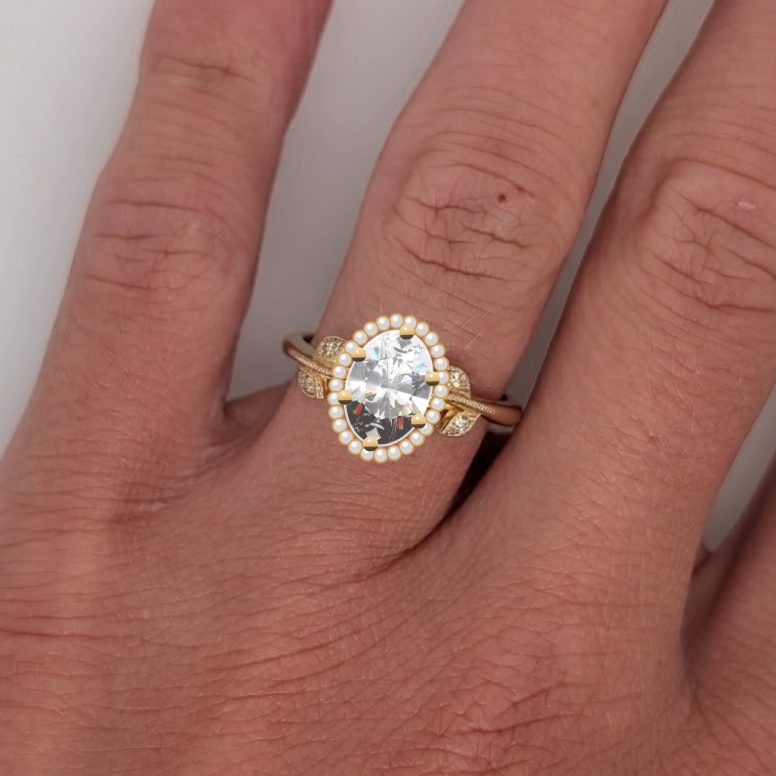
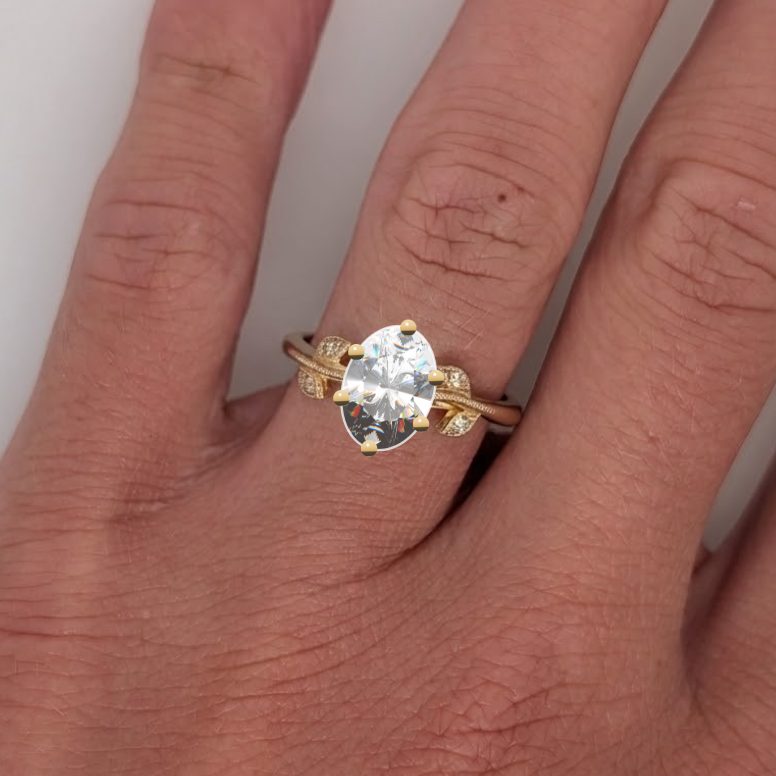
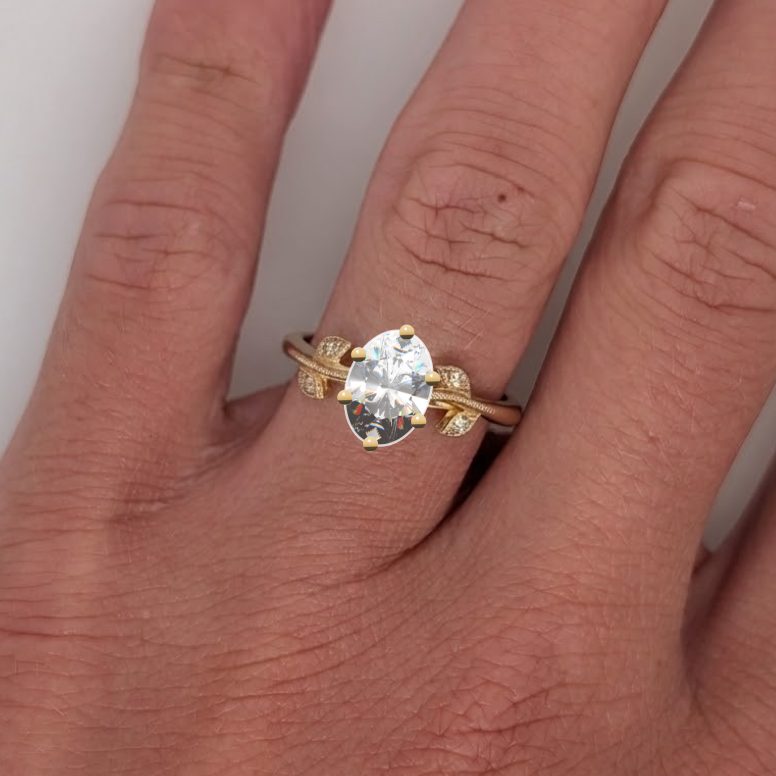
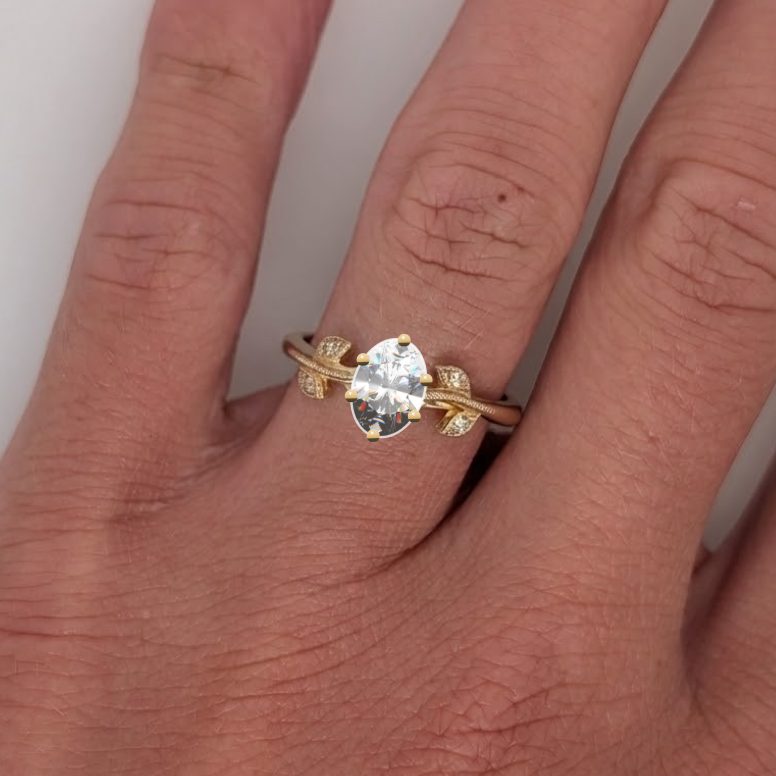
Same 1.5 ct oval, same hand, six styles — rendered by the tool.
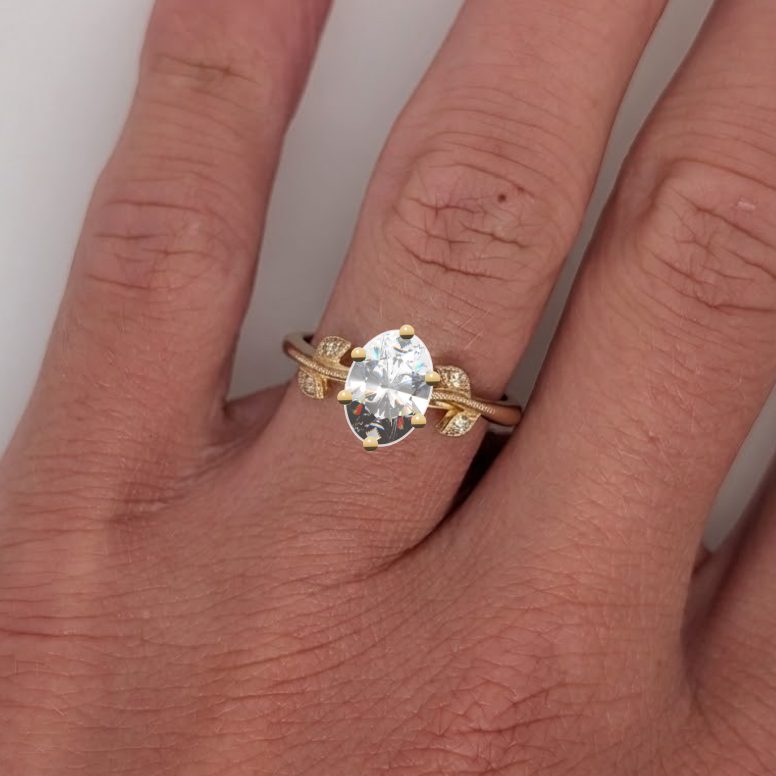
Solitaire
Just the stone and its prongs. Nothing competes with the diamond.
Halo
A ring of small diamonds around the center. It makes the whole thing read bigger — about 8.9 mm across instead of 6.5 mm.
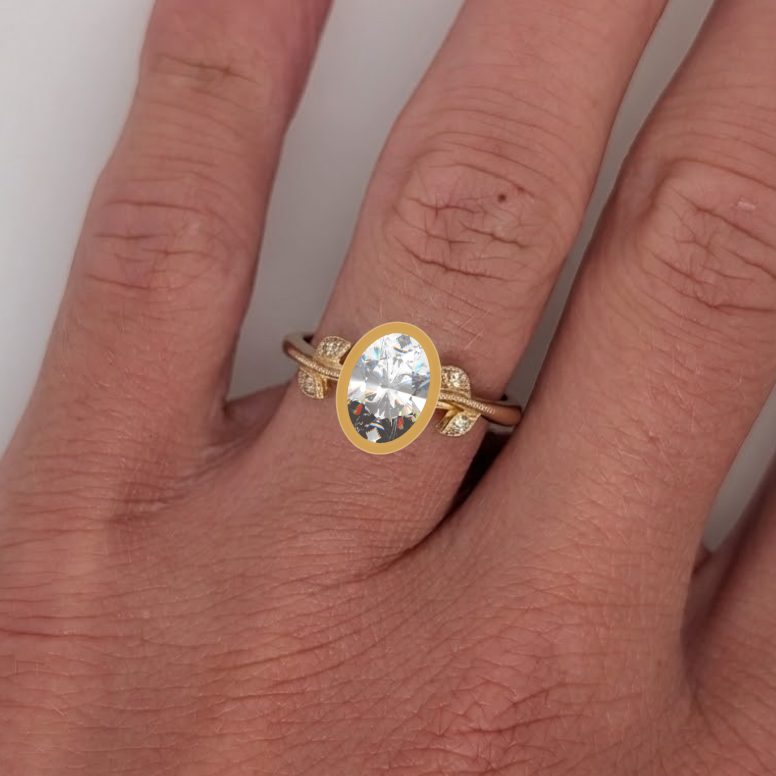
Bezel
A thin metal rim around the stone. Modern, very secure, and it frames the outline.
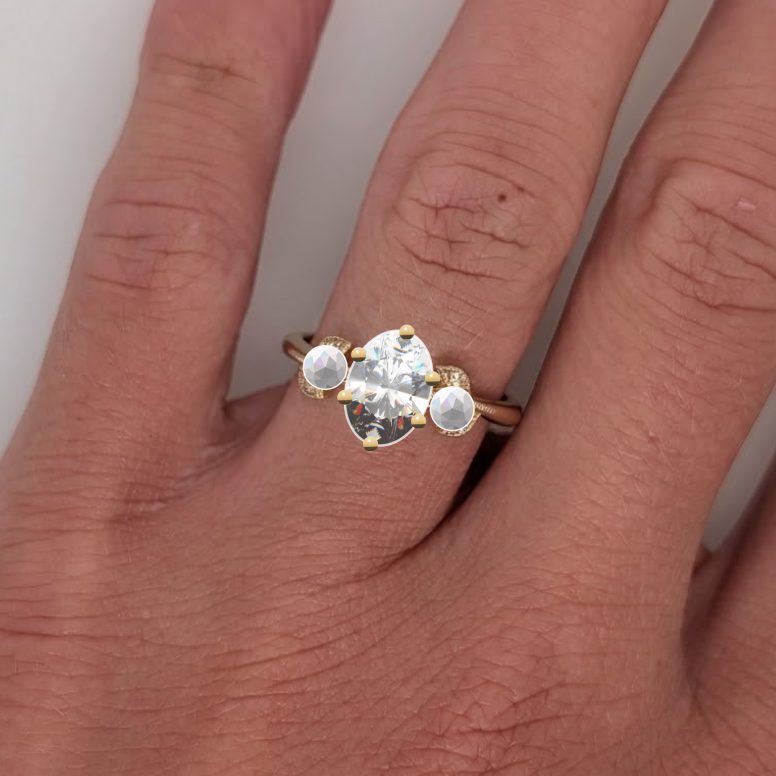
Three stone
A smaller stone each side. The ring reads wider across the finger — about 13.7 mm in all.
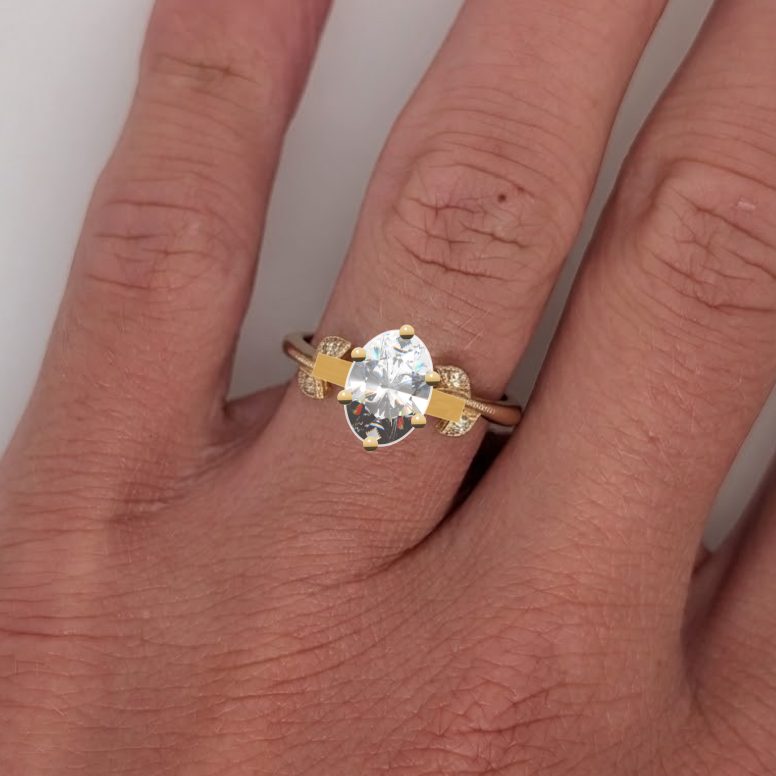
Cathedral
The band rises in arches up to the head, so the stone sits higher. From above, the band runs straight into it.
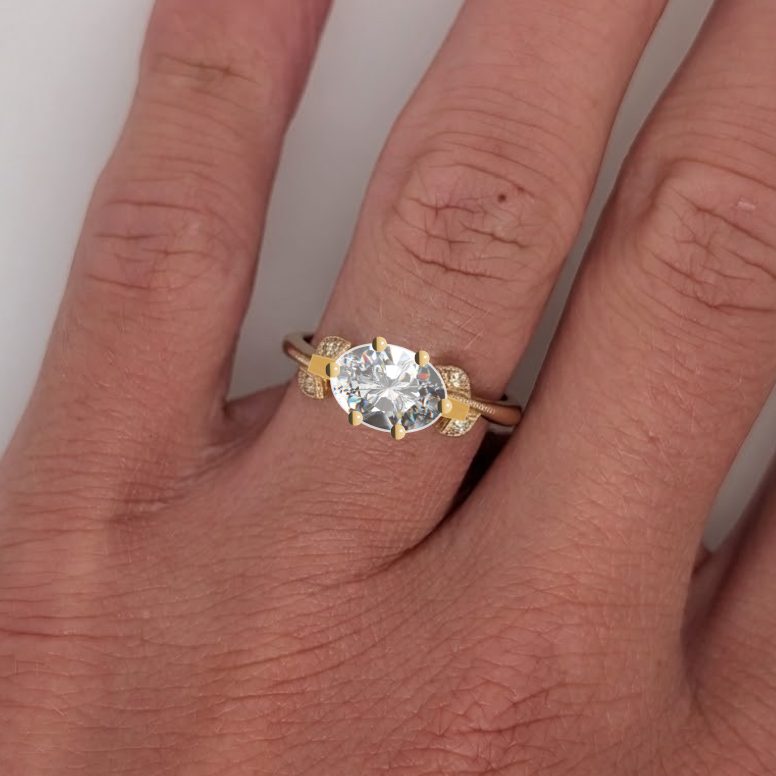
East–west
The stone turned across the finger. This oval then spans 9.1 mm of the finger's width instead of 6.5 mm.
The same six, from above, to scale
On a millimeter grid. Width across the finger, metal and side stones included.
Along the finger, or across it
Long shapes are usually set running along the finger. An east–west setting turns them across, which covers far more of the finger's width: 37% against 51% for this oval on a size 6.
See your diamond in your setting, on your hand
Choose the stone and the style, add a photo, and see how they look together at real size.
Questions
Does a halo make a diamond look bigger?
Yes. In the tool's drawing, a halo takes a 1.5 ct oval from 6.5 mm wide to about 8.9 mm across, so the center reads as a larger stone from a distance.
Do diamonds look bigger on small fingers?
Yes. The same 1.5 ct oval covers 41% of a size 4 finger's width but 32% of a size 9's. It's the same stone; the hand around it changes how big it reads.
What is an east–west setting?
It turns an elongated stone, like an oval or emerald cut, across the finger instead of along it. A 1.5 ct oval then spans 51% of a size 6 finger instead of 37%.
Which setting is the most secure?
A bezel, which wraps the girdle in metal, is generally the most protective. Among prong settings, six prongs hold more securely than four.